Je suis franco/allemand, et mes deux familles ont été marquées dans leur chair et leur esprit par les deux derniers conflits mondiaux.
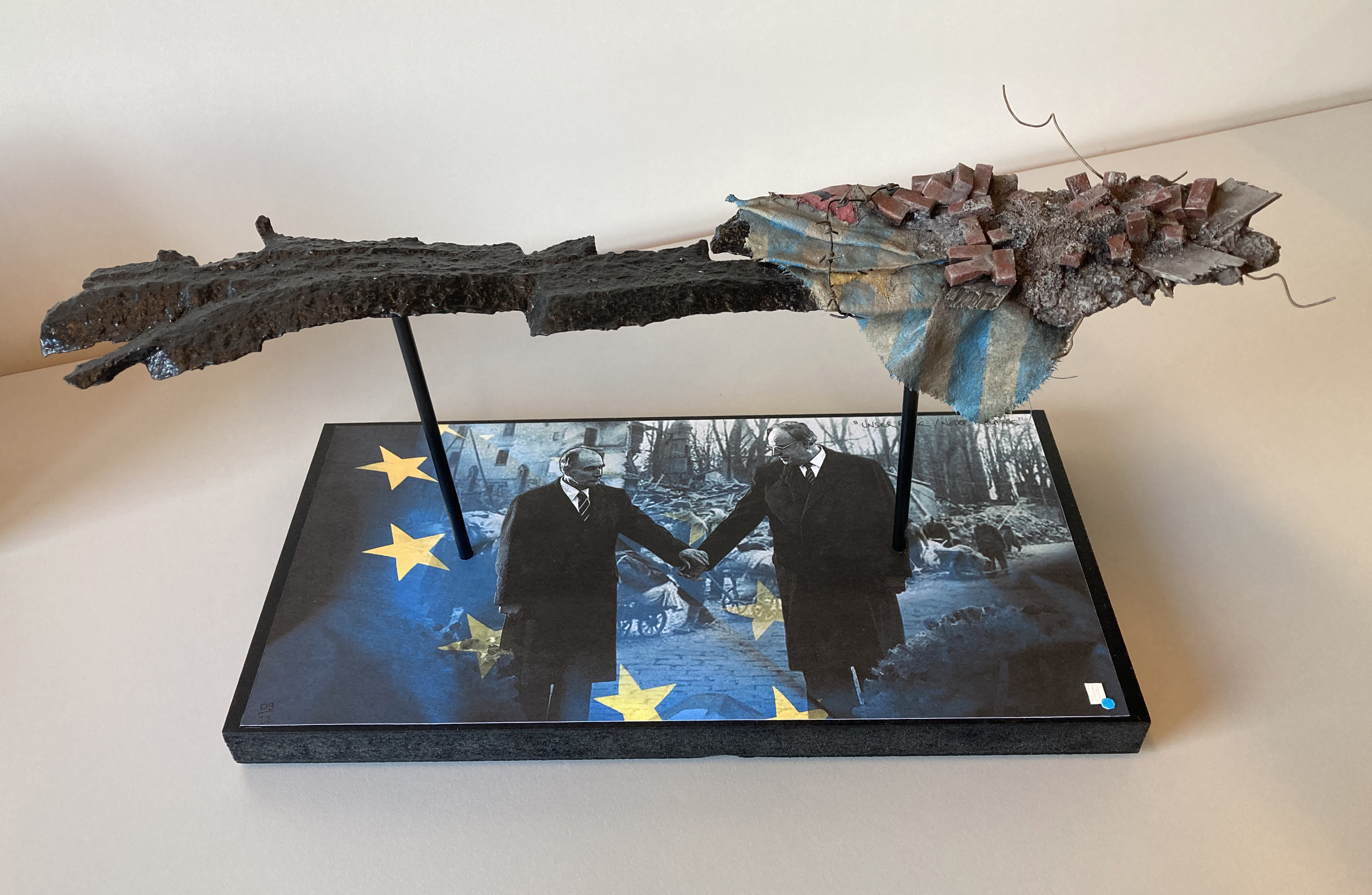
Avec «Unser Erbe» j’évoque ces guerres successives, leurs atrocités et leurs cicatrices, mais aussi la réconciliation franco/allemande, qui est à la base de la fondation européenne et de notre Union actuelle.
Mais au-delà, cela m’a amené à mesurer la capacité de l’homme à pardonner les crimes les plus abjects, et à construire la paix.
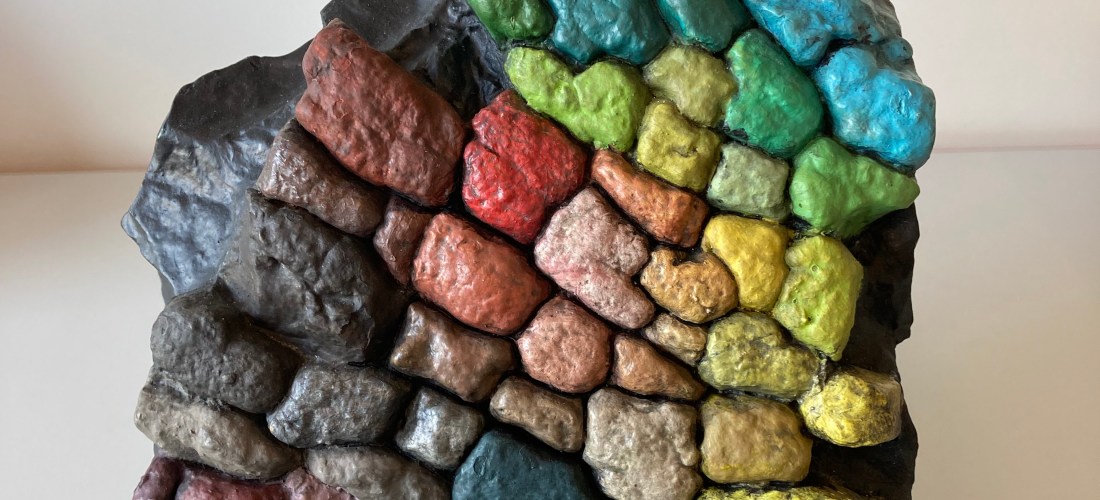
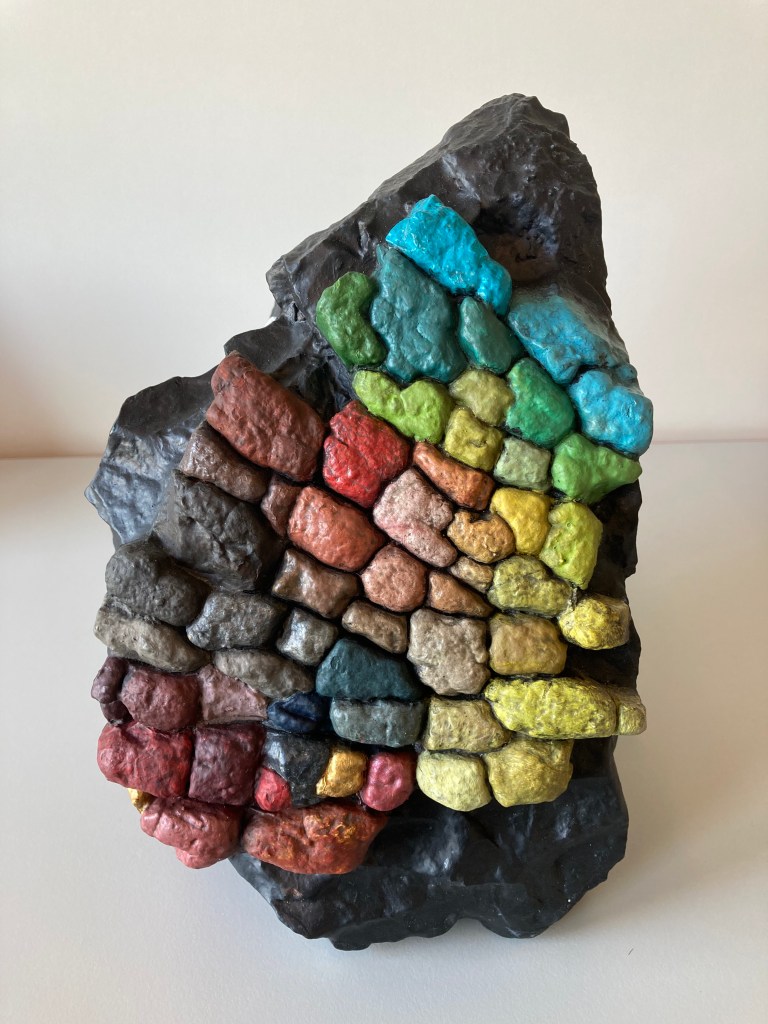
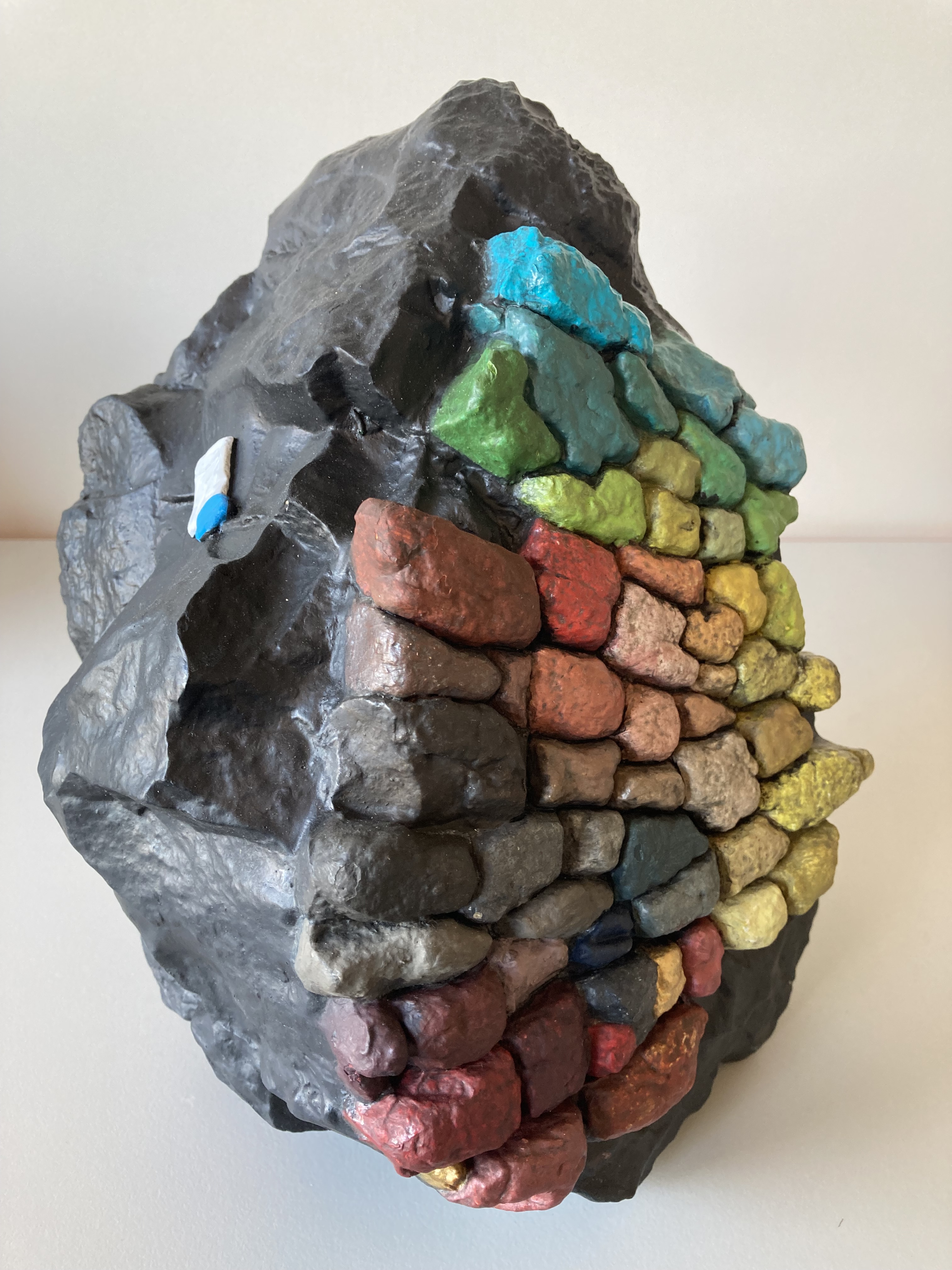
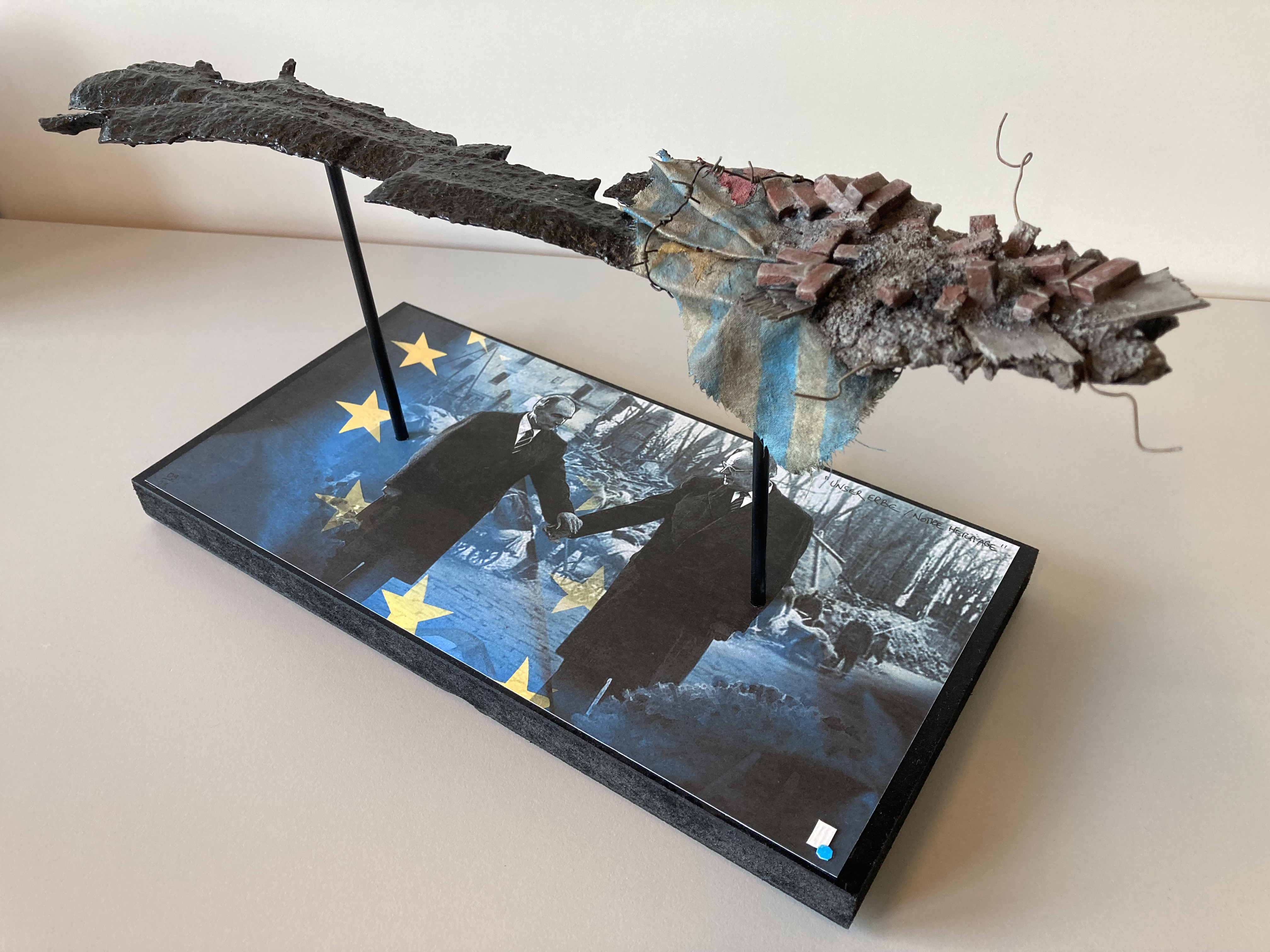
Cette sculpture est symbolique jusque dans la matière dont elle est faite, puisque sa base est constituée d’un authentique éclat d’obus provenant du champ de bataille du « Chemin des dames », dans le département de l’Aisne, où une des plus violentes batailles de la 1ère guerre mondiale eut lieu en 1917, et au cours de laquelle mes deux grands-pères, Hans et Henri, âgés de 18 et 19 ans, ont combattu, chacun du côté opposé.
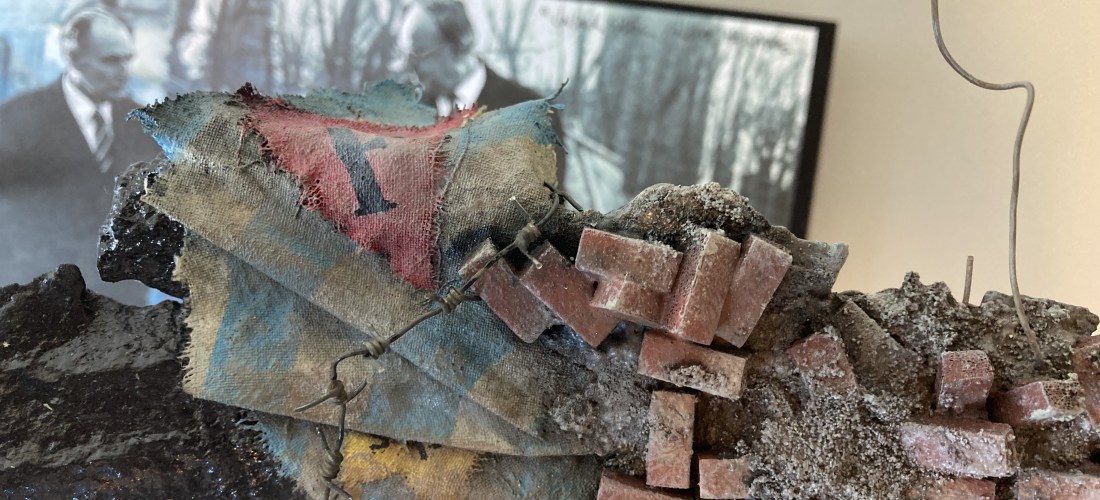
Quant au choix de la photo, entre celles de la rencontre à Reims, entre les présidents De Gaulle et Adenauer en 1962, et celle de François Mitterrand et Helmut Kohl à Verdun en 1994 c’est la dernière qui a le plus parlé à mon cœur.
Mitterrand à dit à son sujet : « Instinctivement, je me suis tourné vers lui, je lui ai tendu la main. Sa main est venue en même temps »
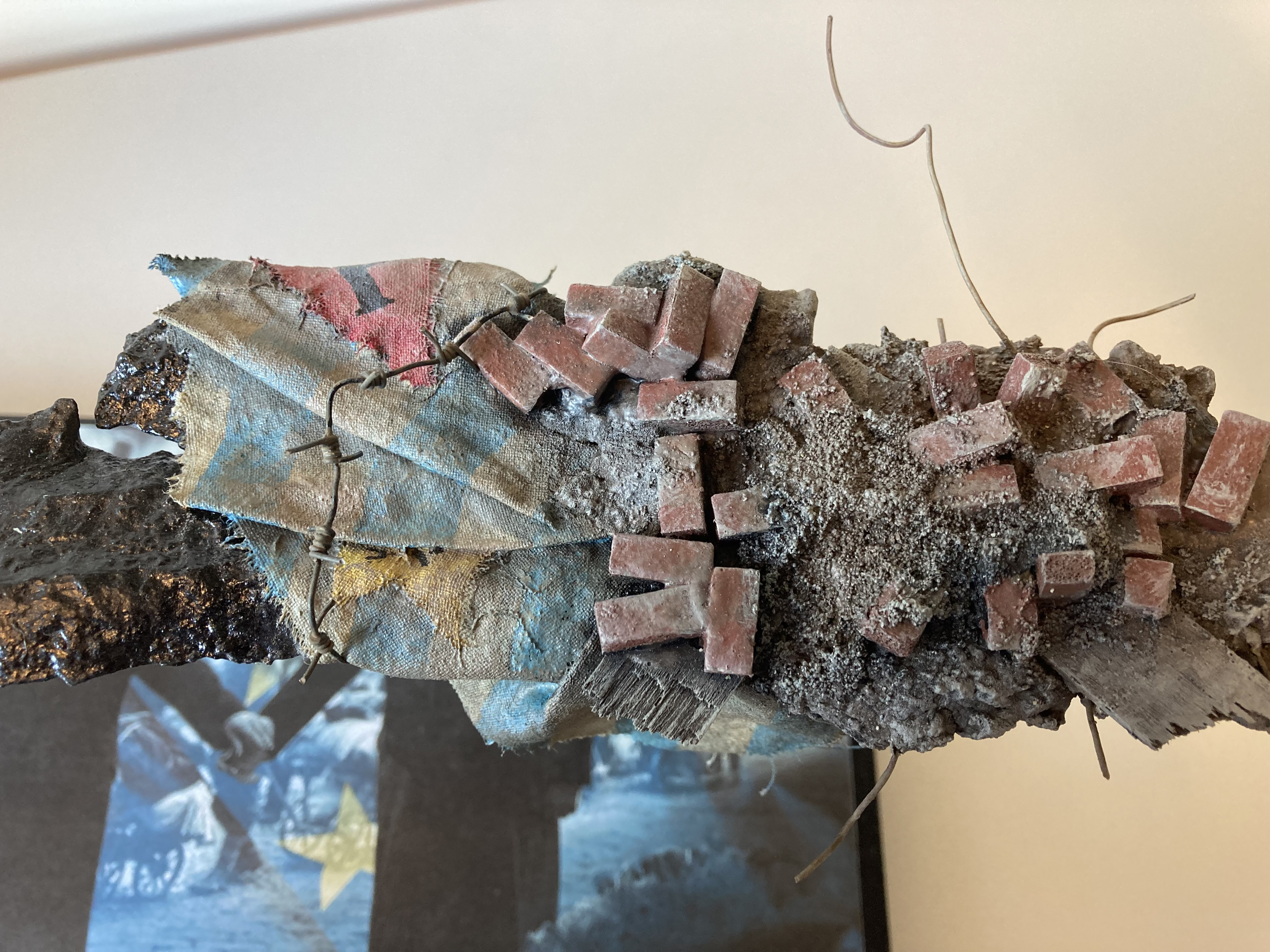
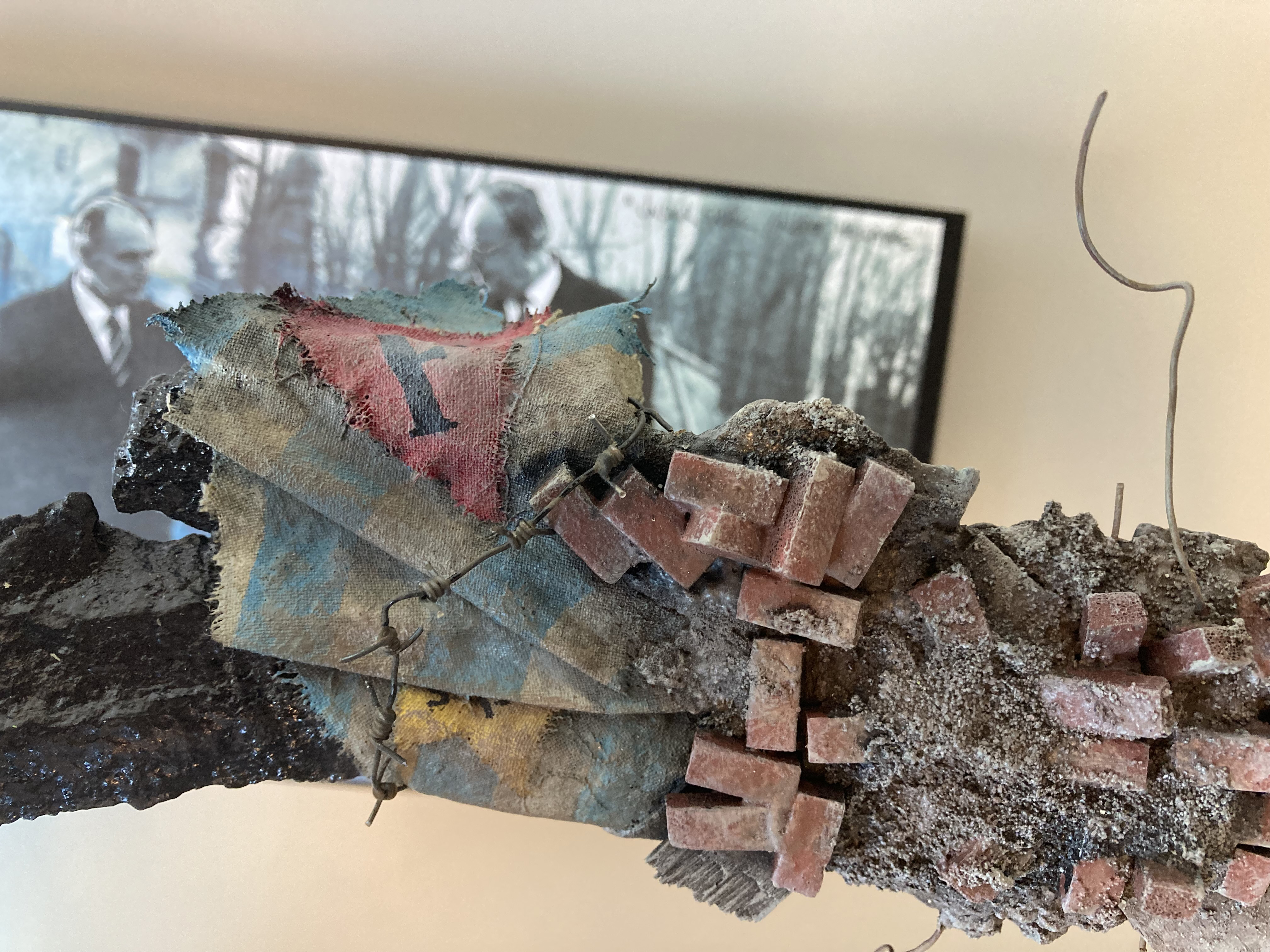
Comme évoqué plus haut, la pièce principale est un authentique morceau d’un obus éclaté, comme il s’en trouve encore aujourd’hui par milliers sur le champ de bataille. Le tissu rayé symbolise l’horreur des camps de concentration et porte à la fois l’étoile jaune et le triangle rouge des prisonniers politiques français. Le fil de fer barbelé représente l’oppression de tous les peules d’Europe et les débris les destructions et les souffrances des populations civiles.
Ich bin Deutsch-Französisch und meine beiden Familien wurden in Fleisch und Geist von den letzten beiden Weltkonflikten gezeichnet.
Mit „Unser Erbe“ erwähne ich diese aufeinanderfolgenden Kriege, ihre Gräueltaten und ihre Narben, aber auch die deutsch-französische Versöhnung, die die Grundlage der europäischen Gründung und unserer gegenwärtigen Union bildet.
Aber darüber hinaus führte es mich dazu, die Fähigkeit des Menschen zu messen, die schlimmsten Verbrechen zu vergeben und Frieden aufzubauen.
Diese Skulptur ist schon durch das Material, aus dem sie gefertigt ist, symbolisch, denn ihre Basis besteht aus einem authentischen Granatsplitter vom Schlachtfeld „Chemin des Dames“ im Département Aisne, wo Im Jahr 1917 eine der heftigsten Schlachten des Ersten Weltkrieges stattfand, in dem meine beiden Großväter Hans und Henri, 18 und 19 Jahre alt, jeweils auf der gegenüberliegenden Seite kämpften.
Was die Wahl des Fotos angeht, zwischen denen des Treffens in Reims zwischen den Präsidenten De Gaulle und Adenauer im Jahr 1962 und dem von François Mitterrand und Helmut Kohl in Verdun im Jahr 1994, ist es das letzte, das mir am meisten zu Herzen ging.
Mitterrand sagte über ihn: „Instinktiv drehte ich mich zu ihm um und streckte meine Hand aus. Seine Hand kam gleichzeitig“
Wie oben erwähnt, handelt es sich bei dem Hauptstück um einen authentischen Splitter einer explodierten Granate, wie sie auch heute noch zu Tausenden auf dem Schlachtfeld zu finden sind. Der gestreifte Stoff symbolisiert den Schrecken der Konzentrationslager und trägt sowohl den gelben Stern als auch das rote Dreieck französischer politischer Gefangener. Der Stacheldraht steht für die Unterdrückung aller Völker Europas und die Trümmer für die Zerstörung und das Leid der Zivilbevölkerung.
I am French/German, and my two families have been marked in their flesh and spirit by the last two world conflicts.
With “Unser Erbe” I evoke these successive wars, their atrocities and their scars, but also the Franco/German reconciliation, which is at the basis of the European founding and our current Union.
But beyond that, it led me to measure man’s capacity to forgive the most abject crimes, and to build peace.
This sculpture is symbolic even in the material from which it is made, since its base is made up of an authentic shrapnel from the battlefield of “Chemin des dames”, in the department of Aisne, where one of the most The violent battles of the 1st World War took place in 1917, during which my two grandfathers, Hans and Henri, aged 18 and 19, fought, each on the opposite side.
As for the choice of photo, between those of the meeting in Reims, between presidents De Gaulle and Adenauer in 1962, and that of François Mitterrand and Helmut Kohl in Verdun in 1994, it is the last one that spoke the most to my heart .
Mitterrand said about him: “Instinctively, I turned to him, I held out my hand. His hand came at the same time”
As mentioned above, the main piece is an authentic piece of an exploded shell, as are still found today by the thousands on the battlefield. The striped fabric symbolizes the horror of the concentration camps and bears both the yellow star and the red triangle of French political prisoners. The barbed wire represents the oppression of all the peoples of Europe and the debris represents the destruction and suffering of civilian populations.
 HDLartworks